120 Pages Weekly Timesheet Logbook V-01
The 120 Pages Weekly Timesheet Logbook V-01 is a practical and professional tool designed for anyone who needs to track their time efficiently. Whether you're a freelancer, small business owner, or project manager, this logbook offers a structured way to record daily activities, manage work hours, and maintain accurate records. Its clean layout and organized format make it ideal for both personal and commercial use.
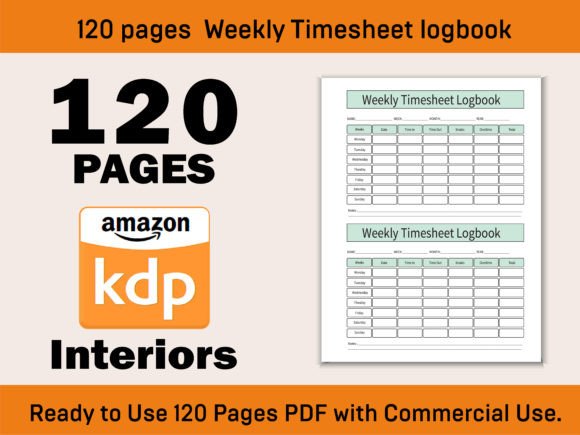
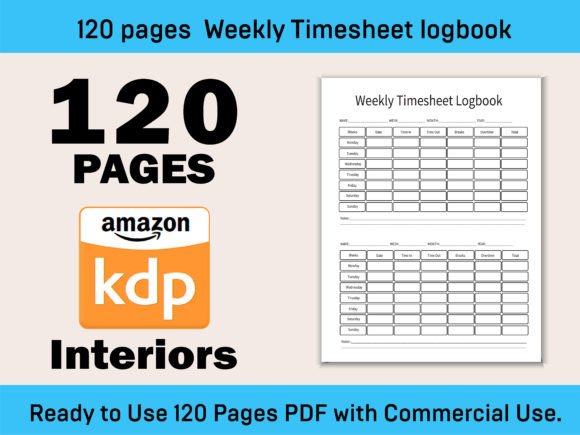
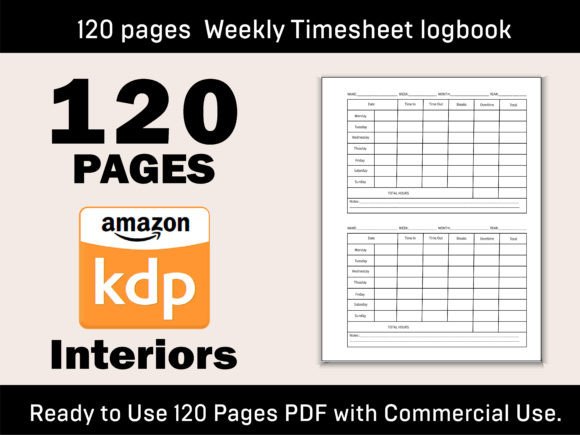
Each page of the logbook includes essential fields such as name, week, month, year, date, time in, time out, breaks, overtime, total hours, and notes. This comprehensive setup ensures that users can easily log their work without missing any important details. The design is simple yet effective, making it easy to fill out and maintain over time.
The logbook is available as a single PDF file, ready for print or upload to Amazon KDP. It’s been tested for compatibility with KDP, ensuring a smooth uploading process. The dimensions are standard at 8.5 inches by 11 inches, with no bleed, making it suitable for high-quality printing. The file is also set at 300 DPI, which guarantees sharp and clear results when printed.
Visual Characteristics and Style
The 120 Pages Weekly Timesheet Logbook V-01 has a professional and minimalist aesthetic. The design is clean, with clearly defined sections that guide the user through each entry. The font used is a standard sans-serif typeface, chosen for its readability and clarity. This makes it easy to read and fill out, even during long workdays.
The layout is well-organized, with two weeks per page, allowing users to track multiple weeks in one place. This feature is especially useful for those who need to monitor progress over an extended period. The consistent spacing and alignment across all pages contribute to a polished look that enhances the overall user experience.
The logbook's style is versatile enough to suit a variety of industries and professions. Its straightforward design makes it suitable for both formal and casual settings, ensuring that it can be used in a wide range of contexts. The absence of excessive graphics or decorations keeps the focus on functionality, making it an excellent choice for professionals who value efficiency.
Best Uses for the Logbook
This timesheet logbook is particularly useful for creative professionals, entrepreneurs, and small business owners who need to keep track of their working hours. It can be used in conjunction with project management tools, helping to streamline workflows and improve productivity. For designers, marketers, and content creators, the logbook provides a reliable way to document time spent on different tasks, which can be helpful for billing and reporting purposes.
For publishers and bloggers, the logbook can serve as a reference for tracking time spent on content creation, research, and editing. It’s also a valuable resource for freelance writers and editors who need to maintain accurate records for clients. In a digital context, the logbook can be used alongside social media analytics tools to better understand how time is allocated across different platforms.
The logbook’s structure also makes it ideal for team-based projects. Managers can use it to monitor employee hours, while team members can track their own progress. This transparency helps to ensure accountability and improves communication within the team. For businesses that require detailed time logs for compliance or tax purposes, the logbook offers a reliable and organized solution.
Choosing the Right Font for Your Projects
While the 120 Pages Weekly Timesheet Logbook V-01 uses a standard sans-serif font, the choice of typography can significantly impact the effectiveness of your design. When selecting a font for similar projects, consider the purpose of the document and the audience it will be used for. A clean, readable font like Arial or Helvetica is often the best choice for professional documents, while a more stylized font might be appropriate for creative or editorial projects.
When evaluating font pairings, it’s important to maintain a balance between aesthetics and readability. A bold, display font can be used for headings, while a simpler, serif font might be better suited for body text. This contrast helps to create visual hierarchy and guide the reader’s attention through the document.
For branding and marketing materials, the choice of font can influence how a brand is perceived. A modern, sans-serif font may convey professionalism and innovation, while a handwritten or script font could add a more personal or artistic touch. Understanding the tone and message of your project will help you choose the most appropriate font for your needs.
When using fonts in commercial projects, it’s important to check the licensing terms to ensure that you have the right to use them. Many premium fonts come with specific restrictions, so it’s always a good idea to review the license agreement before incorporating them into your work. This is especially important if you plan to sell or distribute your designs commercially.
Practical Tips for Using the Logbook
To get the most out of the 120 Pages Weekly Timesheet Logbook V-01, start by setting up a consistent routine for logging your time. Whether you prefer to update it daily, weekly, or monthly, having a regular habit will help you stay organized and accurate. Make sure to fill out each section thoroughly, including notes about specific tasks or projects.
Consider using color coding or symbols to differentiate between different types of work. This can make it easier to quickly identify patterns or trends in your time usage. For example, you might use a red highlight for client-related tasks, a blue highlight for internal projects, and a green highlight for administrative work.
If you’re using the logbook for billing or invoicing, be sure to track all billable hours accurately. This will help you provide your clients with detailed and transparent invoices. You can also use the logbook to analyze your productivity over time, identifying areas where you may need to improve or adjust your workflow.
Finally, don’t forget to keep a backup of your logbook entries. Whether you’re printing it out or using it digitally, having a copy stored in a safe place ensures that you won’t lose important information. This is especially important for legal or financial purposes, where accurate records are essential.